Replacement timing
Is a 10 Year Old Memory foam Mattress Due for Replacement?
Quick answer
A memory foam mattress typically lasts 8 to 10 years. At 10 years yours is past that window, so replacement is reasonable. Age is a prompt to inspect it, not a verdict on its own.
The often-quoted "replace every 7 to 10 years" is an average across constructions, and it is convention rather than a measured standard. What the mattress is made of changes the answer, and what it looks like changes it more.
Typical service life by construction
| Construction | Typical life | Your mattress at 10 years |
|---|---|---|
| Innerspring | 5 to 7 years | Past the window |
| Memory foam | 8 to 10 years | Past the window |
| Hybrid | 7 to 10 years | Past the window |
| Latex | 10 to 15 years | Inside the window |
| Pillow top | 5 to 7 years | Past the window |
Convention, not a standard
This is widely repeated guidance rather than a measured standard. Treat it as a starting point.
The signs that actually matter
Age is the weakest signal. These are stronger: a visible dip or body impression that stays after you get up, an edge that collapses when you sit on it, waking stiff and easing within an hour of getting up, or sleeping noticeably better in other beds. Any one of those matters more than the number of years.
Replacements to consider
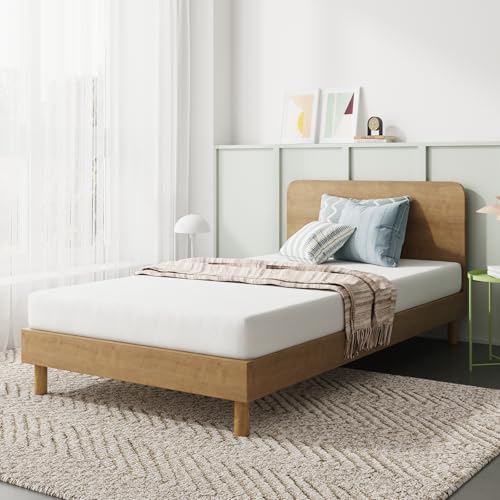
Novilla Twin XL Mattress
$96.998 inch twin xl memory foam.
Check price on Amazon
Novilla 8 Inch Twin Mattress
$104.998 inch twin memory foam.
Check price on Amazon
EGOHOME 8 Inch Twin Mattress
$109.998 inch twin memory foam, medium firm feel as the maker describes it.
Check price on Amazon
Zinus Memory Foam 8 Inch Green Tea Mattress
$109.998 inch twin memory foam.
Check price on AmazonFrequently asked questions
How long does a memory foam mattress last?
Commonly 8 to 10 years. That is a widely repeated convention rather than a tested standard, and real life varies with sleeper weight, whether the mattress had proper support underneath, and whether it was protected from moisture. Good support underneath is the single biggest factor in reaching the top of the range.
How do I know when to replace a mattress?
Look rather than count. Strip the bed and check for a visible dip where you sleep, press along the edge to see whether it collapses, and notice whether you wake stiff and loosen up within an hour. A mattress that passes all three is fine regardless of age, and one that fails any of them is worth replacing early.
Can a topper extend the life of an old mattress?
Only if the problem is surface feel. A topper makes a firm or slightly worn surface more comfortable, and it is a genuinely good cheap fix for that. It cannot restore support: if the mattress has a dip, the topper follows the dip down with you. A sagging mattress needs replacing, not covering.
Does a mattress warranty cover sagging?
Most cover sagging beyond a stated depth, commonly between three quarters of an inch and an inch and a half, measured with nothing on the bed. Many are also voided by inadequate support underneath, which is why manufacturers specify slat spacing and centre legs. Keep proof of purchase and the support your frame provides.
How to read the numbers on this page. Standard mattress and bedding dimensions are industry-wide and the same across manufacturers. Guidance like replacement intervals, firmness by body weight and walking clearance is convention rather than a measured standard, and every table here says which it is. Where a manufacturer does not publish a figure we leave it out instead of estimating. This is not medical advice: a mattress is not a treatment for a medical condition, and persistent pain is a reason to see a clinician.