Mattresses
Best Mattresses for Kids
Quick answer
The EGOHOME 8 Inch Twin Mattress is our top pick for kids at $109.99, an 8 inch twin memory foam mattress with CertiPUR-US certified foam, sized 38 by 75 inches for a first big kid bed.
The EGOHOME 8 Inch Twin Mattress is our top pick for kids at $109.99, an 8 inch twin memory foam mattress with a medium firm feel as the maker describes it and CertiPUR-US certified foam. This page covers a first bed through a growing preteen's bed, not a crib or a nursery mattress; for infant and toddler sleep, parentcalc.com covers that age range in more depth than this site does. A lighter body does not need the same thickness a heavier adult does, which is why an 8 inch mattress is a reasonable choice for a kid where it would be thin for a full-grown adult. Below are picks by size, from Twin through Full, since sizing for growth matters more here than firmness or cooling features do.
What size mattress fits a growing kid?
A standard Twin measures 38 by 75 inches, the common size for a first bed once a kid moves out of a crib. A Twin XL keeps the same 38 inch width but adds 5 inches of length, to 80 inches, which matters more for a taller preteen or a room that will also serve a teenager later than it does for a younger child with plenty of room to grow into a 75 inch length first. Neither size is a milestone; it is a measurement question best answered by comparing a kid's current height and expected growth against the Mattress Size Calculator rather than guessing.
Thickness is where a kid's mattress can reasonably differ from an adult's. A lighter body does not compress foam as deeply as an adult body does, so an 8 inch mattress that would feel thin under a 200 lb adult can still offer a kid enough cushioning between their body and the support layer underneath. Several picks below stay at 8 to 10 inches for that reason, which also keeps the price lower and the bed easier for a kid to climb in and out of on their own.
Firmness follows a similar logic. A medium firm stated feel, the most common label in this catalog, works for most kids regardless of sleep position, since a lighter body does not sink as far into a given firmness as a heavier one does. There is no developmental reason a kid needs a specific firmness label; it comes down to what feels comfortable to that child, the same as it does for an adult.
Beginner picks
The lowest-cost twin mattresses in this catalog, for a first bed or a tight budget.

Novilla 8 Inch Twin Mattress
$104.99An 8 inch twin memory foam mattress with a cooling feature, at $104.99, the least expensive mattress in this catalog.
Best for: The tightest first-bed budgets
Check price on Amazon
Zinus Memory Foam 8 Inch Green Tea Mattress
$109.99An 8 inch twin memory foam mattress at $109.99.
Best for: Budget shoppers comparing Zinus against Novilla
Check price on AmazonIntermediate picks
A certified foam twin, or the extra 5 inches of length a Twin XL gives a taller kid.

EGOHOME 8 Inch Twin Mattress
$109.99An 8 inch twin memory foam mattress with CertiPUR-US certified foam and a medium firm feel, at $109.99.
Best for: Parents who want a certified foam layer
Check price on Amazon
Zinus 12 Inch Twin XL Green Tea Memory Foam Mattress
$198.67A 12 inch twin XL memory foam mattress with a medium firm feel as the maker describes it, at $198.67, 5 inches longer than a standard twin.
Best for: A taller preteen who has outgrown a 75 inch length
Check price on AmazonExpert picks
Full size for a kid's room with more space, or a bed a teenager will use for several more years.

EGOHOME Full Size Memory Foam Mattress
$179.99A 10 inch full memory foam mattress with CertiPUR-US certified foam and a cooling feature, at $179.99.
Best for: A kid's room with space for a bigger bed
Check price on Amazon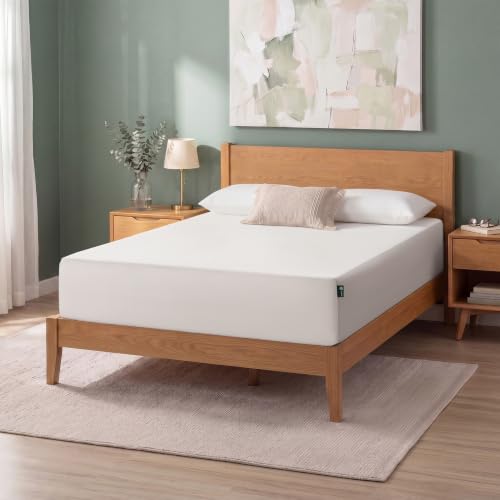
Zinus Memory Foam 12 Inch Green Tea Mattress
$239.99A 12 inch full memory foam mattress at $239.99, more thickness for an older kid closer to adult size.
Best for: An older kid closer to adult weight
Check price on AmazonWho should not buy this tier: Infants, toddlers, or a crib mattress. This page is about a first bed and beyond, and nursery-specific sizing and safety guidance is covered on parentcalc.com, not here.
How do these picks compare on specs?
| Spec | Novilla 8 Inch Twin Mattress | EGOHOME 8 Inch Twin Mattress | Zinus 12 Inch Twin XL Green Tea Memory Foam Mattress |
|---|---|---|---|
| Price | $104.99 | $109.99 | $198.67 |
| Size | Twin | Twin | Twin XL |
| Thickness | 8 in | 8 in | 12 in |
| Construction | Memory foam | Memory foam | Memory foam |
| Feel | - | Medium firm | Medium firm |
| Cooling | Manufacturer describes a cooling feature | Manufacturer describes a cooling feature | - |
| CertiPUR-US foam | - | Yes | - |
A dash means the manufacturer does not publish that figure for this product. We do not estimate it.
How does a Twin compare to a Twin XL and a Full?
These are the standard published dimensions for each size, the numbers worth comparing against a kid's current height and the room itself.
| Size | Width | Length |
|---|---|---|
| Twin | 38 in | 75 in |
| Twin XL | 38 in | 80 in |
| Full | 54 in | 75 in |
Industry standard
These are standard published dimensions, the same across manufacturers.
How we chose
We did not test any of these mattresses in person. Picks are researched from each manufacturer's own published size and thickness, favoring the sizes and thinner profiles most relevant to a growing kid rather than an adult. We do not include any infant, toddler or crib products here; that age range is covered on parentcalc.com instead.
Frequently asked questions
What size mattress does a kid need for a first bed?
A standard Twin, at 38 by 75 inches, is the most common first-bed size once a kid moves out of a crib, and it fits most kids' rooms comfortably. A Twin XL, the same width with 5 more inches of length, is worth considering for a taller kid or a room expected to hold a teenager later, but it is not required for a younger child who has plenty of length to grow into.
When should a kid move from a Twin to a Twin XL or Full?
That depends more on the kid's height and the room than a specific age. Once a child is approaching the 75 inch length of a standard Twin, a Twin XL or Full gives more room to grow before another mattress change is needed. Room size is worth weighing too, since a Full takes up noticeably more floor space than a Twin.
Does a kid's mattress need to be as thick as an adult's?
No. A lighter body does not compress foam as deeply as a heavier adult body does, so an 8 to 10 inch mattress that would feel thin under most adults can still give a kid enough cushioning above the support layer. Thinner mattresses are also easier for a kid to get in and out of on their own and generally cost less.
Is CertiPUR-US certification important for a kid's mattress?
CertiPUR-US is an independent program that tests foam for things like emissions, so a certified mattress has been checked by an accredited lab rather than relying only on the manufacturer's own word. Not every mattress in this catalog carries it, including some in this roundup, since a mattress that lacks the certification may simply not have applied for it rather than having failed a test.
What firmness is best for a kid's mattress?
A medium firm stated feel, the most common label across this catalog, works for most kids regardless of how they sleep, since a lighter body does not sink into a given firmness the way a heavier adult body does. There is no specific firmness a kid medically needs; it comes down to what that child finds comfortable, the same as it does for anyone else.
How to read the numbers on this page. Standard mattress and bedding dimensions are industry-wide and the same across manufacturers. Guidance like replacement intervals, firmness by body weight and walking clearance is convention rather than a measured standard, and every table here says which it is. Where a manufacturer does not publish a figure we leave it out instead of estimating. This is not medical advice: a mattress is not a treatment for a medical condition, and persistent pain is a reason to see a clinician.